

Early Career Researcher Visits
We are pleased to invite applications for the TACTIX Early Career Researcher (ECR) Short-Term Scientific Visits, which support focused research stays of up to one month at a partner institution. These visits are designed to foster collaboration, facilitate knowledge exchange, and contribute to the scientific goals of the TACTIX project. Early-career researchers affiliated with Boğaziçi University are encouraged to apply. Applicants should submit a project proposal detailing their research objectives, planned activities, expected outcomes, and how the visit will contribute to the TACTIX mission. Selected participants will receive funding to cover travel, accommodation, and related expenses.
APPLY NOW |
Ongoing/Completed ECR Visits
Hüden Neşe

Hüden Neşe is currently a postdoctoral researcher at the Institute of Biomedical Engineering, Boğaziçi University, where she is affiliated with the Multimodal Imaging & Physiology Laboratory (MIMLAB). She holds a PhD in Biomedical Engineering from Boğaziçi University, with a research focus on frequency-dependent dynamics of intrinsic functional connectivity networks. She completed her undergraduate education in Mathematics at Middle East Technical University and Psychology at Istanbul Commerce University, and obtained an MSc degree in Biomedical Engineering from Boğaziçi University, developing a strong interdisciplinary background that integrates cognitive science with advanced neuroimaging and network analysis methods. She is visiting Amsterdam UMC (AUMC) from January 16th to February 14th, 2026, as part of her TACTIX Early Career Researcher (ECR) visit. During her ECR visit, Hüden Neşe is working closely with Prof. Menno Schoonheim and Dr. Tommy Broeders on investigating dynamic large-scale brain network alterations associated with cognitive impairment in multiple sclerosis (MS). Her research focuses on applying Leading Eigenvector Dynamics Analysis (LEiDA) to resting-state fMRI data from cognitively preserved, mildly cognitively impaired, and cognitively impaired MS patients, as well as matched healthy controls, to characterize recurrent phase-locking brain states and their temporal properties. In addition, she integrates network control theory, utilizing individual structural connectomes derived from diffusion MRI, to estimate the energetic cost of transitions between functional brain states. She then examines how these dynamic and energy-based metrics relate to domain-specific cognitive performance.
Gülce Turhan
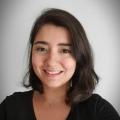
Gulce Turhan is currently working at the Computational Imaging Laboratory in the Biomedical Engineering Department at Boğaziçi University, where she is focusing on arterial spin labeling (ASL) MRI for brain tumor imaging. She holds a Master’s degree in Electrical and Electronics Engineering from Marmara University and a Bachelor’s degree in Electronics Engineering from Uludağ University. During her Early Career Researcher (ECR) visit to Amsterdam UMC (AUMC) between 12 January and 10 February, Gulce Turhan is working closely with Dr. Vera Keil and Dr. Cristina Lavini on the analysis of dynamic contrast-enhanced (DCE) MRI data acquired at Acıbadem University Hospital. Gulce Turhan is calculating the volume transfer constant (Ktrans) of gliomas using both an in-house DCE analysis tool developed at AUMC and the commercially available OLEA software, and is systematically comparing the resulting permeability metrics. In addition, glioma DCE datasets acquired and processed at AUMC are being incorporated, enabling the creation of a combined multi-site dataset. Using this harmonized dataset, Gulce Turhan is deriving blood–brain barrier arterial spin labeling (BBB-ASL) water exchange time (Tex) maps of gliomas and is investigating their relationship with DCE-derived Ktrans to assess the potential of BBB-ASL as a non-contrast method for evaluating blood–brain barrier permeability in gliomas.
Ayşe İrem Çetin
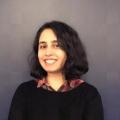
Ayse Irem Cetin is a Computer and Industrial Engineering graduate from Kadir Has University and currently a PhD Candidate at the Computational Imaging Laboratory, Institute of Biomedical Engineering, Boğaziçi University. Her PhD focuses on advanced perfusion MRI techniques, specifically Arterial Spin Labelling (ASL) MRI and its applications in different pathologies such as brain tumors. She is visiting Amsterdam UMC (AUMC) from January 12th to February 10th, 2026, as part of her TACTIX Early Career Researcher (ECR) visit. She will collaborate with Dr. David van Nederpelt on the analysis of multi-site Multiple Sclerosis (MS) datasets. The primary objectives of her ECR visit are to harmonize the data structure and segmentation protocols across three distinct cohorts and to establish a standardized processing pipeline, with a specific focus on Blood-Brain Barrier Arterial Spin Labelling (BBB-ASL) MRI data. Once the pipeline is validated across all cohorts, it will be used to quantify perfusion and permeability alterations in MS lesions, normal-appearing white matter (NAWM), and specific brain regions. Additionally, the study will assess differences in BBB permeability between healthy controls and MS patients.
Meltem Karataş
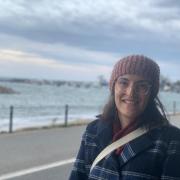
Dr. Meltem Karatas graduated from Hacettepe University Faculty of Medicine and received her PhD in Neuroscience through a joint doctoral program between the Universities of Strasbourg and Freiburg. She is currently a postdoctoral researcher at the Institute of Biomedical Engineering at Boğaziçi University, where her work primarily focuses on small-animal MRI methodologies. She is planning a research visit to Amsterdam UMC in late spring to collaborate with the Preclinical and Translational MRI Group. During this visit, she aims to establish and optimize arterial spin labeling (ASL) protocols for assessing the blood–brain barrier (BBB) and blood–cerebrospinal fluid barrier (BCSFB) in rodents using 7T MRI. This work will involve optimization of data acquisition parameters, as well as the development and refinement of analysis pipelines. The overarching objective of the visit is to investigate brain barrier disruption in animal models of multiple sclerosis.